






Choosing a school backpack sounds straightforward until you're standing in front of a wall of options in three sizes with no clear reference point. The right backpack isn't the one that holds the most. It's the one that fits your child's body now, carries a reasonable load comfortably, and can be adjusted as they grow throughout the year. This guide covers how to choose a school backpack for elementary-aged kids, with specific measurements and fit checks you can use in the store.

How Big Should a Child's School Backpack Be?
A backpack should be sized to fit your child's body, not sized to maximize storage capacity.
The key proportions to check: the bag should be narrower than your child's rib cage, and when worn and adjusted properly, it should sit below the tops of the shoulders and end around the hips.
For most kindergarten and early elementary children, this typically means choosing a smaller bag than parents initially expect. The goal is a backpack that stays close to the body and moves with the child instead of shifting and swaying with every step. A stable, close-fitting bag distributes the weight more evenly and places less strain on the child's shoulders and back.
One practical way to avoid shopping in person is to measure the width of your child's back from shoulder to shoulder and compare it with the backpack's listed dimensions. If the dimensions are not available, bring your child to the store and hold the bag against their back before having them try it on.

Where Should a Backpack Sit on a Child's Back?
When properly adjusted, the backpack should sit below the tops of the shoulders and end at the hips, not lower.
A bag that hangs below the hips shifts weight away from the body's centre and can cause the child to compensate by leaning forward. You will notice this immediately when the bag is packed. If your child pitches forward to balance the weight, the bag is sitting too low, is too heavy, or both.
To check the fit in the store, load the bag with a realistic amount of weight rather than testing it while empty, then have your child put it on. Adjust the shoulder straps so the bag sits snugly against the back without pulling the shoulders down or backward. The bottom of the pack should land roughly at the top of the hips.
Two things to look at once it's on:
- Are the shoulder straps flush against the shoulders, or are they already sliding off?
- Is there a gap between the back of the bag and your child's back?
Either of those is a sign the bag is too large for your child's current size.

What Features Are Actually Useful in a Kids' School Backpack?
The features worth paying attention to are the ones that affect how the bag fits and carries, not how many pockets it has.
Shoulder strapsLook for two padded, adjustable straps. Straps that are narrow, unpadded, or fixed at a single length are harder to fit correctly as the child grows.
Chest strapA chest strap connects the two shoulder straps across the front and keeps them from sliding off the shoulders during movement. It's a small feature that makes a noticeable difference.
Hip beltA hip belt transfers some of the backpack's weight from the shoulders to the hips. It is most useful for children who regularly carry heavier items, such as gym shoes, textbooks and school supplies.
Back panelA padded back panel adds comfort and structure. Look for some ventilation between the bag and the child's back, especially for kids who walk to and/or back from school.
Fabric and weightA lighter fabric keeps the empty bag from using up the weight budget before anything is packed. Look for a washable material, since school bags get dirty quickly and should be easy to clean.
Zippers and compartmentsCheck that your child can open and close the zippers independently and reach the main compartment without help. A bag that requires adult assistance at drop-off becomes a daily frustration. One well-sized main compartment and one smaller front pocket are often enough for elementary students.

How Heavy Should a School Backpack Be?
Many children carry more than their parents realize once binders, water bottles, lunch bags, and extra supplies accumulate.
Signs that a backpack may be carrying too much include:
- Your child leans noticeably forward when wearing it
- The straps leave marks or dig into the shoulders
- The bag bounces against the lower back during walking
- Your child avoids putting it on or complains about wearing it
If any of these show up, check the weight first, then the fit. A bag that's adjusted correctly but overloaded will still cause discomfort.
How Should a School Backpack Be Packed?
Pack heavier items closest to your child's back and lighter, softer items toward the front and sides.
This keeps the centre of gravity close to the body and reduces the pulling sensation that comes from front-heavy loading. In practice: textbooks and binders go directly against the back panel, while notebooks, folders, and softer supplies go in front of them or in the outer pocket.
A few other packing habits that help:
- Remove unnecessary papers and supplies regularly. Don't assume your child or teacher would do it themselves. Backpacks can accumulate weight quickly.
- Check whether the lunch bag needs to fit inside the main compartment or whether it attaches to the outside. This affects how much space is actually available for books and supplies, and it's worth clarifying before the first day.
- Distribute items across the compartments rather than stacking everything in one section. This keeps the bag flatter against the back.

Before You Buy: Questions Worth Asking First
A few practical checks before purchasing can save a return trip.
Ask the school whether your child will be using a cubby or a locker. Cubbies often have tighter size restrictions, which may limit how large the backpack can be.
Avoid sizing up on the assumption that your child will grow into a larger bag. A backpack designed for a bigger child will not fit or carry properly now, even if it may fit next year. The potential long-term savings are not worth compromising your child's comfort, posture and ability to carry the bag safely.
One Safety Note on Backpack Attachments
Decorations and clip-on accessories are common on kids' backpacks, and most are perfectly fine. Still, it is worth checking them before attaching anything to the bag.
Health Canada notes that some clip-on backpack toys can present hazards to young children. Before clipping anything onto a school bag, assess whether it's age-appropriate, whether it could detach and become a small-part hazard, and whether it could catch on equipment at school.
This is a small consideration, but worth mentioning given how often kids want to personalize their bags with clips, charms, and figurines.
When to Replace a School Backpack
Replace the backpack when it is necessary, not on a fixed schedule.
A backpack your child used in kindergarten may no longer fit correctly by grade two because your child has grown and the bag has accumulated wear. Check the fit at the start of each school year using the same guidelines. The bag should be narrower than the rib cage, sit below the tops of the shoulders and end at the hips.
Other signs that it is time to replace the backpack include straps that no longer adjust to the correct length, a broken or stuck zipper, a worn or damaged back panel, or a bag that is visibly too small for the school year's supplies.
Our School Backpacks
If you're using the fit checks in this guide to shop around, our two kids' backpacks were built with the same priorities in mind. Both are sized on the smaller side (30 cm wide × 38 cm tall × 12 cm deep, about 10–12 L of space), so they sit closer to the body instead of hanging past the hips.
Each one has padded, adjustable shoulder straps, a padded back panel, and a sturdy top handle. Inside is one roomy main compartment with double zipper pulls that open from either side, a front zip pocket, drop-in side pockets for a water bottle or snacks, and a small inner pocket for keys. A reflective front patch adds visibility for early mornings and walks home.
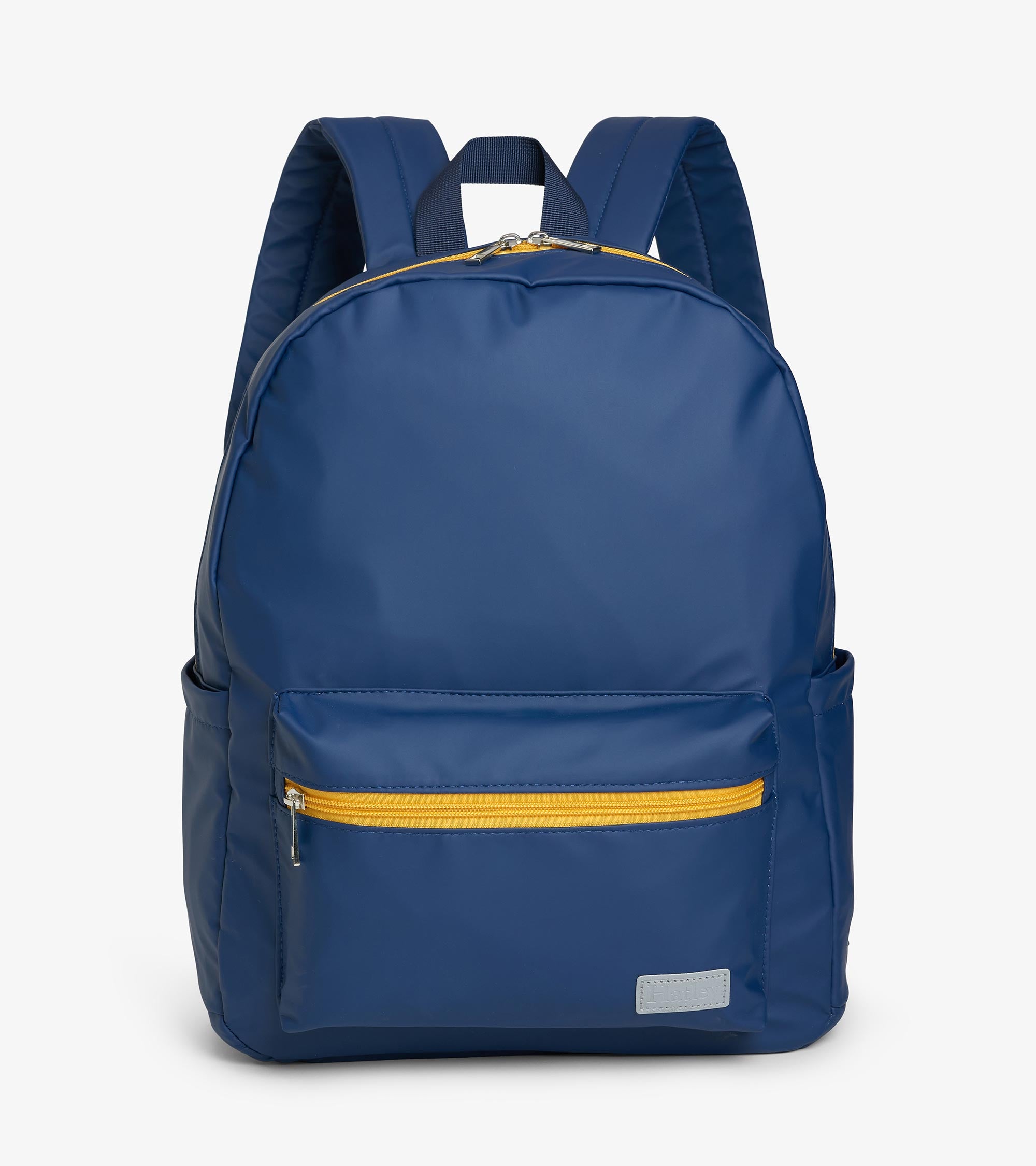
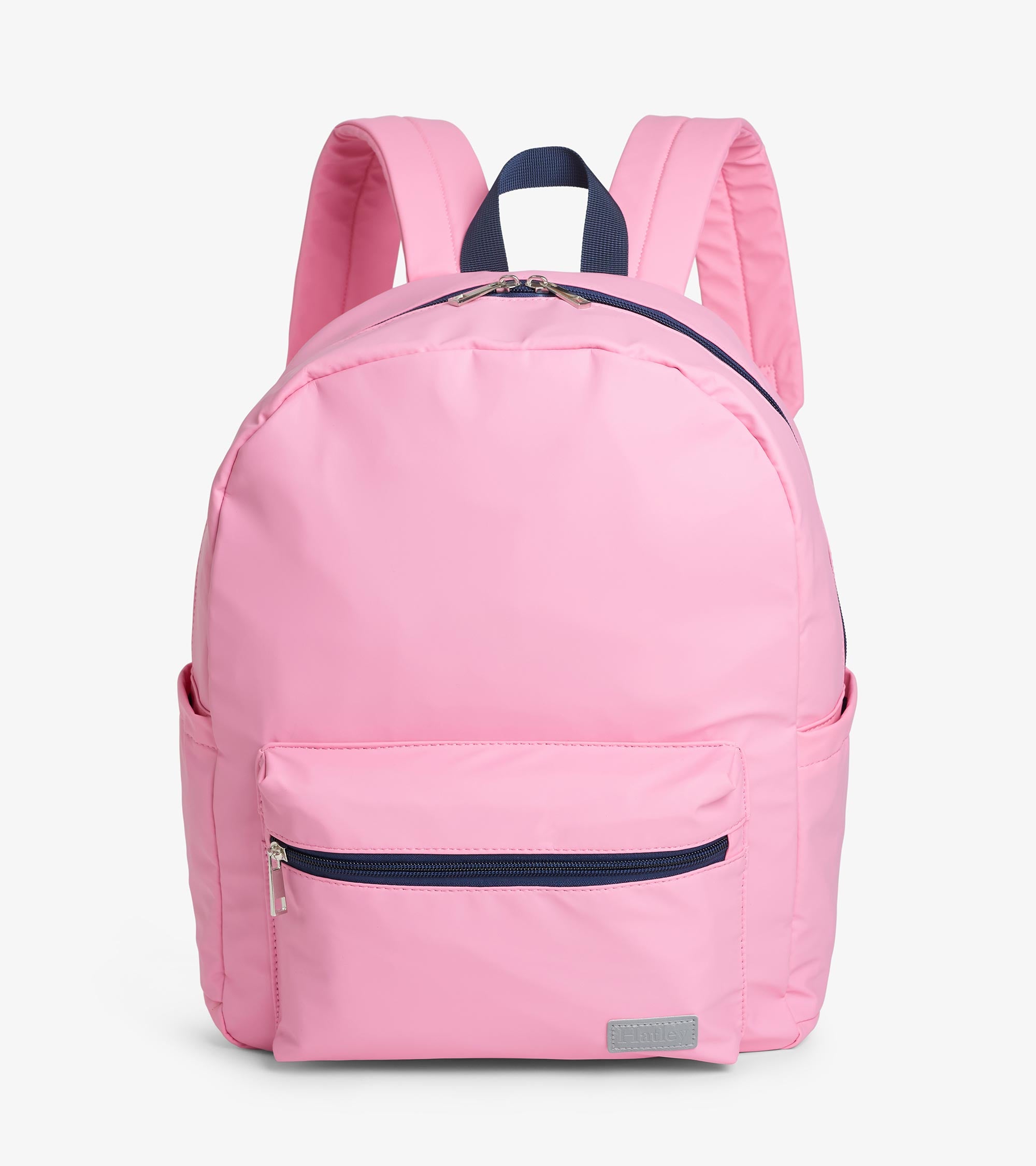
Shown above: Kids Navy Backpack (navy with yellow zipper pulls) and Kids Pink Backpack (pink with navy zipper pulls). $40 CAD each.
Choosing a school backpack well comes down to fit, weight, and packing habits rather than features or size alone. A bag that's proportioned to your child's body, adjusted correctly, and loaded thoughtfully will carry through the school year with a lot less fuss than one selected for storage capacity.